
What Are the Symptoms of Anxiety Disorder: Common Indicators

Some days, your mind feels like it won't slow down. You replay the same conversation. You can't figure out why your heart is racing. You can't sleep. Your stomach feels upset. Even small decisions suddenly feel tiresome.
Does that always mean you have an anxiety disorder? No. Not really. We all feel this way occasionally. But if it keeps happening, that's different. Your everyday life might become hard, and it can be your mind asking for help.
The American Psychological Association (APA) defines anxiety disorder as any group of disorders that have a central theme of “an emotional state of fear, worry, or excessive apprehension.”
Let’s take a look at what are the common symptoms of anxiety disorder to better understand it.
When Does Anxiety Become More Than Everyday Stress?
Feeling anxious before an interview makes sense. Your brain is preparing you for something important. Usually, once that moment passes, your body settles down too.
But with an anxiety disorder, things don't work that way. The worry doesn't leave just because the situation is over. Occasionally there isn't even a situation. Your mind just keeps searching for something to worry about. It can go on for months.
And after a while, it starts changing how you live. You stop going to certain places, avoid certain people, and may overthink simple decisions.
Common Symptoms of Anxiety Disorder
Anxiety doesn't look the same for everyone. You may feel constantly restless. Someone else may notice physical symptoms long before realizing anxiety is the cause.
Most people face the following symptoms:
(a) feeling nervous, restless, tense, or constantly on edge
(b) excessive worry that's difficult to control
(c) a sense that something bad is about to happen, even without a clear reason
(d) trouble concentrating or making decisions
(e) feeling irritable more often than usual; and
(f) trouble sleeping or waking up frequently during the night
These symptoms usually go on for many months rather than a few stressful days.
Physical Signs People Often Don't Connect With Anxiety
There’s a chance that your body reacts to your anxiousness before your mind registers it. For example, you're sitting quietly and just notice your heart beating faster. You're about to make a phone call, and your hands become all sweaty. You're leaving home, but your stomach feels upset before that.
This is because anxiety activates your body's stress response. Some of the physical symptoms are as follows:
(1) Heart palpitations or a racing heartbeat
(2) rapid breathing or hyperventilation
(3) sweating
(4) trembling or shaking
(5) muscle tension
(6) shortness of breath
(7) nausea or abdominal discomfort
(8) dry mouth
(9) cold or sweaty hands; and
(10) numbness or tingling in the hands or feet.
Occasionally these symptoms are so strong that you may even feel that you're having a heart concern instead of a panic attack. Emotional and Mental Signs to Watch For Is every symptom visible? Actually, no.
Sometimes anxiety shows up as thoughts that refuse to slow down. It doesn't matter how hard you try.
You may keep expecting the worst to happen. Small problems feel much bigger than they are. Your mind jumps from one worry to another and then to another without stopping. These symptoms can make work, school, and relationships much harder than they actually are.
Emotional symptoms of anxiety disorders include (1) constant fear, panic, or dread; (2) feeling uneasy most of the time; (3) difficulty controlling worry; (4) obsessive or repetitive anxious thoughts; (5) feeling easily irritated; and (6) finding it hard to focus because your mind stays fixed on your worries.
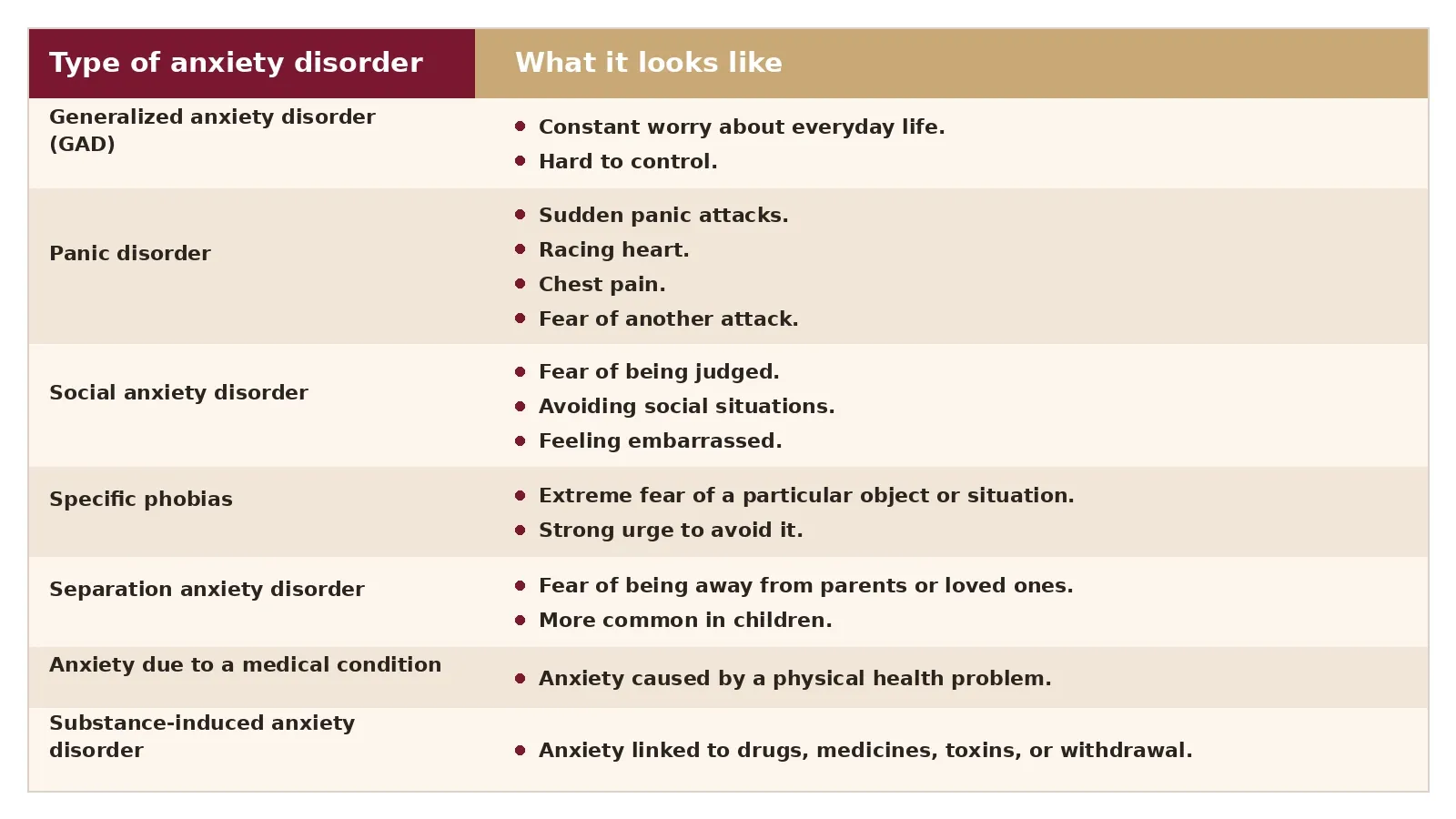
Common Types of Anxiety Disorders
Different anxiety disorders can show up in different ways.
When Should You Seek Professional Help?
Ask yourself something simple.
- Is anxiety running your life more than you're running it?
- Are you avoiding things because of fear?
- Has worrying become a regular part of your life?
- Are you struggling to sleep because your brain refuses to quiet down?
- Has the problem been going on for months instead of days?
If the answer is yes, it is best to talk to a healthcare or mental health professional.
Don't have to wait until things become unbearable. The earlier you recognize anxiety, the easier it often is for you to manage.
It doesn't have to stay this hard. One conversation can change a lot. Start there. Book a consultation with NADZ Healthcare. We'll meet you where you are.
FAQs
What are the treatments for anxiety?
Psychotherapy, medicines, or both are anxiety treatment options. It also helps to work on your sleeping habits, stress management, and coping skills. A mental health professional can help with that too.
How to reduce anxiety and stress with lifestyle changes?
It helps to practice deep breathing, journal, and be mindful. Pay special attention to your diet and limit items that can make you anxious. For instance, caffeine. Speak with a mental health professional before introducing significant shifts.
What is the 3-3-3 rule for anxiety?
The 3-3-3 rule is a grounding technique for anxiety where you (1) name three things you see, (2) three sounds you hear, and (3) move three body parts to shift attention away from anxiety.
More Posts
What Is Chronic Anxiety Disorder? How It Differs from Normal Anxiety

What Is Home Care Nursing? Complete Guide

How to Treat Social Anxiety Disorder: Steps Toward Confidence
Why Do You Feel Worse After a Rest Day? The Physiology Behind It

Knee Cracking When Standing Up: What It Means and When to Act