Difference Between Food Allergy and Intolerance

You eat something that feels completely normal. A bowl of pasta, a glass of milk or perhaps an ice cream for dessert. A few hours later, something inside your body changes. You feel gassy, bloated, slightly nauseous, or even scratchy. Instantly, your mind rushes to the most obvious thought, “Am I allergic to something?”
Not every reaction to food is an allergic reaction.
This is where many people get confused. Food allergies and intolerances are often used interchangeably, but they are very different conditions. While one involves your immune system, the other is simply your digestive system’s inability to break down food.
Knowing the difference between food allergy and intolerance will help you identify the risk, diagnosis, and treatment plan.
What Is Food Allergy?
A food allergy happens when the immune system mistakenly identifies a food as harmful and reacts to it. Even a tiny amount of the trigger food can cause symptoms because the body releases antibodies, immunoglobulin E (IgE), to fight the perceived threat. They make their way to cells that secrete chemicals, which then lead to an allergic reaction.
What Is Food Intolerance?
Food intolerance, or food sensitivity, is related to your digestive system. When your digestive system is unable to metabolise (break down) certain foods or ingredients within them, it shows up as irritation.
Important Differences Between Food Allergy and Intolerance
Food allergies and intolerance are two different issues because they involve two different body systems. As a result, their symptoms, the way they’re tested and treatment changes too.
Causes
The cause of both these issues results from the interaction between the food you eat and how your body’s system responds to it.
Allergies
Food allergies are a result of immune system dysfunction. Despite everything being proper, the immune system confuses the food/ingredient as a “threat” or allergen.
Intolerance
Food intolerance can happen for various reasons. For instance,
- Your body does not have enough enzymes to break down the food ingredient
- Your gut is sensitive to some chemicals added to foods
- Underlying stomach issues like celiac disease or inflammatory bowel disease (IBD)
Symptoms
Although both the issues have some overlapping symptoms, the time it takes for your body to respond varies.
Allergies
Food allergy symptoms usually appear within minutes to a few hours after eating the trigger food. Common symptoms include:
- swelling of lips, tongue, or throat
- hives or skin rash
- itching
- breathing difficulty
- nausea or vomiting
- dizziness
- anaphylaxis (severe allergic reaction)
Note: Anaphylaxis is a serious and life-threatening allergic reaction that requires immediate medical attention. You’ll notice severe breathing difficulty, rapid drop in blood pressure, and loss of consciousness.
Intolerance
Food intolerance symptoms are usually slower and more digestive-focused. They can appear several hours after eating. You’ll notice:
- bloating
- gas
- stomach pain
- diarrhoea
- nausea
- headaches
- fatigue
Testing Process
Diagnosing allergies and intolerances usually involve a combination of symptom tracking and clinical tests. Accurate testing then helps you avoid triggering food items.
Allergies
Some ways to test for food allergies are:
- Skin testing
It happens in the doctor's clinic itself and gives you results within 15-30 minutes. A nurse or an allergist will prick your skin (usually on the back or arms) with small, sterile probes that contain food allergens. If you develop a wheal, which looks like a mosquito bite bump, the test is positive. This test is not painful. However, it is itchy.
- Blood Testing
Blood testing is an easier alternative to skin testing. It involves measuring the amount of IgE antibody your body creates as a response to specific food items. It takes about 1-2 weeks for the results to arrive.
- Basophil Activation Testing (BAT)
It is a newer kind of blood test which checks how your immune cells react. They take a small sample of your blood and then expose it to the specific food in a lab. If the basophils (immune cells) get activated, it is likely that you are allergic to the food.
- Oral food challenge
Oral food challenge is considered the gold standard for diagnosis. It is only performed under the supervision of an allergist. The allergist feeds you an increasing amount of suspected allergy-causing food to check for reactions. They also keep emergency medicine and equipment ready during this process.
Intolerance
Unlike an allergy, many food intolerances do not have a biological marker that clearly shows up in the labs. This means you will have to depend on tracking your diet, removing the potential triggers, and then watching what happens when you eat them again.
- Food and symptom diary
You will have to track what you eat, at what time, and the symptoms that occur. It is important to mention the portion also because sometimes a small amount of food may not cause intolerance. For example, you can digest a splash of milk in coffee but not a full glass of milk per se.
There are some clinical tests too that your doctor may recommend.
- Hydrogen breath test
This is a standard test for lactose and fructose intolerance. You will have to drink a sugar solution and then breathe into the device at regular intervals. If your body is unable to absorb it, the sugar will produce hydrogen and show up in your breath.
- Celiac Disease Blood Tests
Celiac disease is your immune system's response to gluten. It damages your small intestine and often mirrors the symptoms of food intolerance. You’ll have to undergo a blood test as step one. If your results are positive, then another follow-up antibody test can be done, followed by a biopsy to confirm it.
- Elimination Diet
There are two phases to this test. First, the elimination phase, where you completely remove the suspected food/ingredient from your diet. You still track your symptoms to see if they get better. If they improved significantly, one or more of the eliminated foods was causing a problem. The second phase includes introducing the food(s) one at a time while keeping everything else out of the diet. If you notice symptoms, you’ve found your trigger.
Treatment and Management
When it comes to allergies and intolerance, the best preventive plan is to avoid the trigger food. In some cases, medication is possible too.
Allergies
You can treat and manage allergies in multiple ways. Like this,
- Avoidance
The simplest way to manage your allergies is to stay away from the food that causes them. Step away.
- Medicines
Your doctor can suggest pills, syrups, nasal sprays, or eye drops depending on the nature of allergies.
- Immunotherapy
It is often used for treating severe allergies. You take shots of purified allergen extracts to train your immune system to not overreact.
- Emergency epinephrine
In case of severe allergies, you may need to carry an epinephrine shot on you as emergency treatment.
Intolerance
Food intolerance can be managed and treated by:
- Limiting intake
Again, the easiest way is to limit your intake of the said food or ingredient. You need to know how much your body can digest and either consume within that limit or avoid completely.
- Enzyme supplements
Supplements, like lactase enzymes, can help with managing lactose intolerance. You can take the supplement before consuming dairy products to reduce the symptoms.
- Medicines
Over-the-counter medicines like antacids and antidiarrheals can reduce the symptoms.
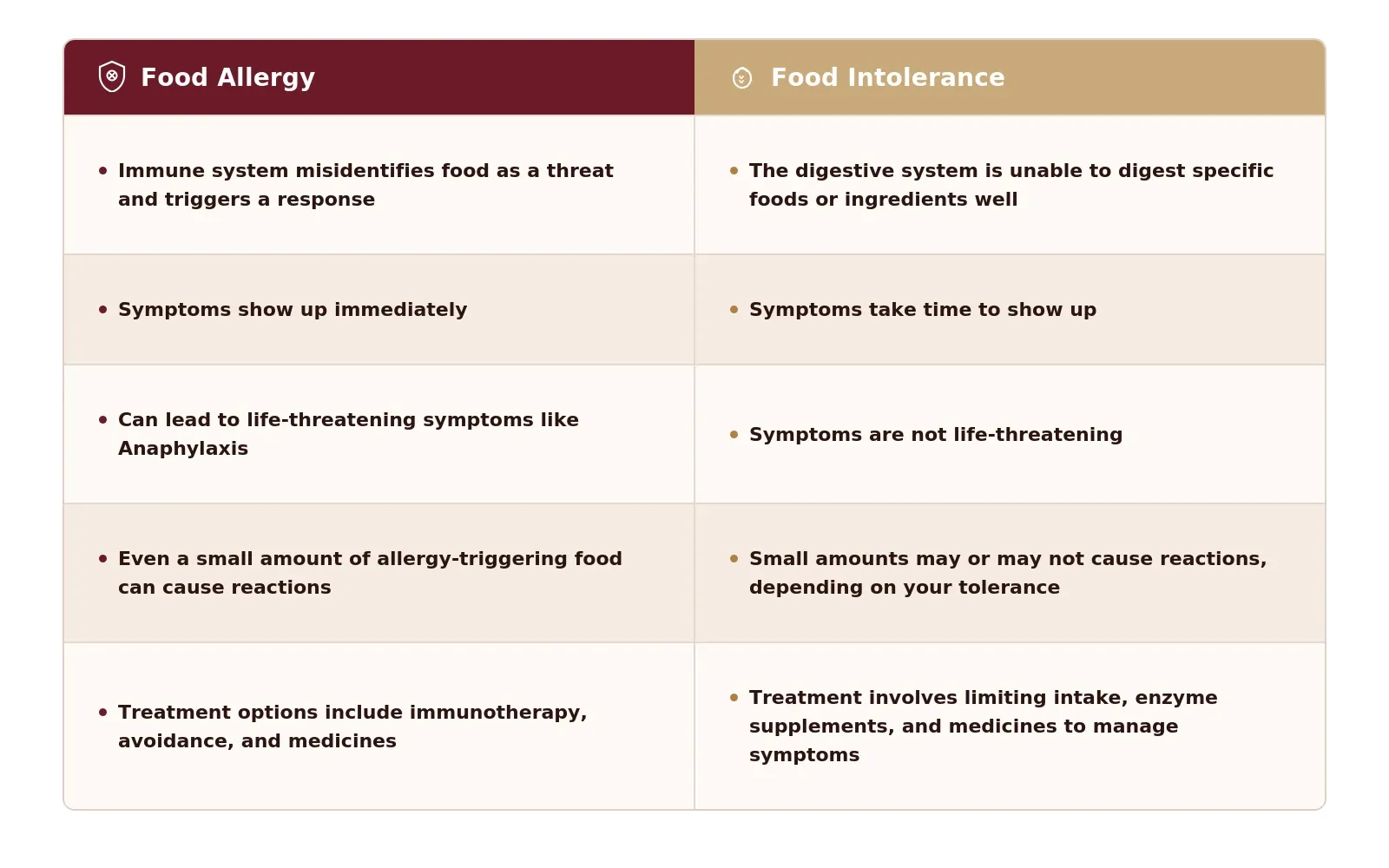
Comparison Table
Below is a table summarising the differences between food allergy and intolerance.
Conclusion
Clarity on the difference between food allergy and intolerance can help you recognise symptoms early and seek the right treatment. Food allergies involve the immune system and can sometimes become life-threatening, while food intolerance is usually linked to digestion and discomfort.
If you frequently notice symptoms after eating certain foods, it is best to consult a healthcare professional for proper diagnosis and management.
NADZ Healthcare brings food intolerance and allergy testing to your doorstep in Dubai. The DHA-licensed doctors and nurses test you at home, in the office, or at your hotel with full confidentiality. The best part? They’re available 24/7 for your wellbeing.
FAQs
Can I be intolerant but not allergic?
Yes, you can be intolerant to some food items but not allergic. In these cases, you will have digestive symptoms and no severe allergic reactions.
What is the main difference between food allergy and intolerance?
The main difference is that food allergies involve the immune system, while food intolerance mainly affects the digestive system.
What are 3 symptoms of food intolerance?
Three common symptoms of intolerance are bloating, gas, and diarrhoea.
What are the two most common food intolerances?
The two most common types are lactose and gluten intolerance.
More Posts

What Is Chronic Anxiety Disorder? How It Differs from Normal Anxiety

What Are the Symptoms of Anxiety Disorder: Common Indicators

What Is Home Care Nursing? Complete Guide

How to Treat Social Anxiety Disorder: Steps Toward Confidence

Why Do You Feel Worse After a Rest Day? The Physiology Behind It