



Caring for a loved one or even yourself is an emotional experience. Although hospitals offer clinical expertise, they put people in an unfamiliar environment that makes them feel far away from home. That’s one big reason why many people are now opting for at-home care. More often than not, healing feels easier in a space you know at the back of your hands. Also, being surrounded by family and friends quietly improves an individual’s morale and their overall wellbeing. It allows care to feel a lot less like it's a “process.” In this blog, we simplify what is home care nursing and who it is for. We also discuss what to expect and how to choose the best home care nursing partner.
What Is Home Care Nursing - Definition
Home care nursing means receiving medical services and assistance at home by doctors and nurses. The idea is to make medical care easily accessible for those who prefer the comfort of their home or who cannot go to a hospital due to challenges.
Who Can Benefit from Home Care Nursing?
Home care nursing becomes very important in few cases like:
- Elderly people who need steady care and find it hard to go to the hospital often.
- People who need support with physiotherapy, medication, or wound dressing after surgeries
- Individuals with chronic illnesses like heart problems, or breathing problems.
- People feel pain while moving around and need special assistance.
- New mothers and small children
In each of these cases, the goal of home care nursing still remains the same – consistent care + attention to personal needs + comfort of home to improve their health without disrupting their routine. That being said, home care nursing is beneficial for everyone.
Care You’ll Commonly Find
- Surgical care and recovery: Dressing wounds, monitoring vitals, managing pain, catheter care, and support for small movements.
- Rehab: Helps patients with targeted exercising and pain-relief strategies.
- Elderly care: Bathing, dressing, grooming, and taking medicines on time. Nurses are also trained to take care of those with dementia and Alzheimer's.
- Long-term illness care: Administering insulin (diabetes), managing blood pressure, following up after strokes, and more.
- Critical care: Help with ventilator care, IV treatment, injections, and food tubes.
- Maternal care: Helping new moms with breastfeeding, taking care of the baby, and making sure the mother’s body is healing properly after birthing.
- Child care: Making sure babies and kids get vaccinations, food, medications, and other things they need to grow well.
Home Care Nursing vs Hospital Care: What’s the Difference?
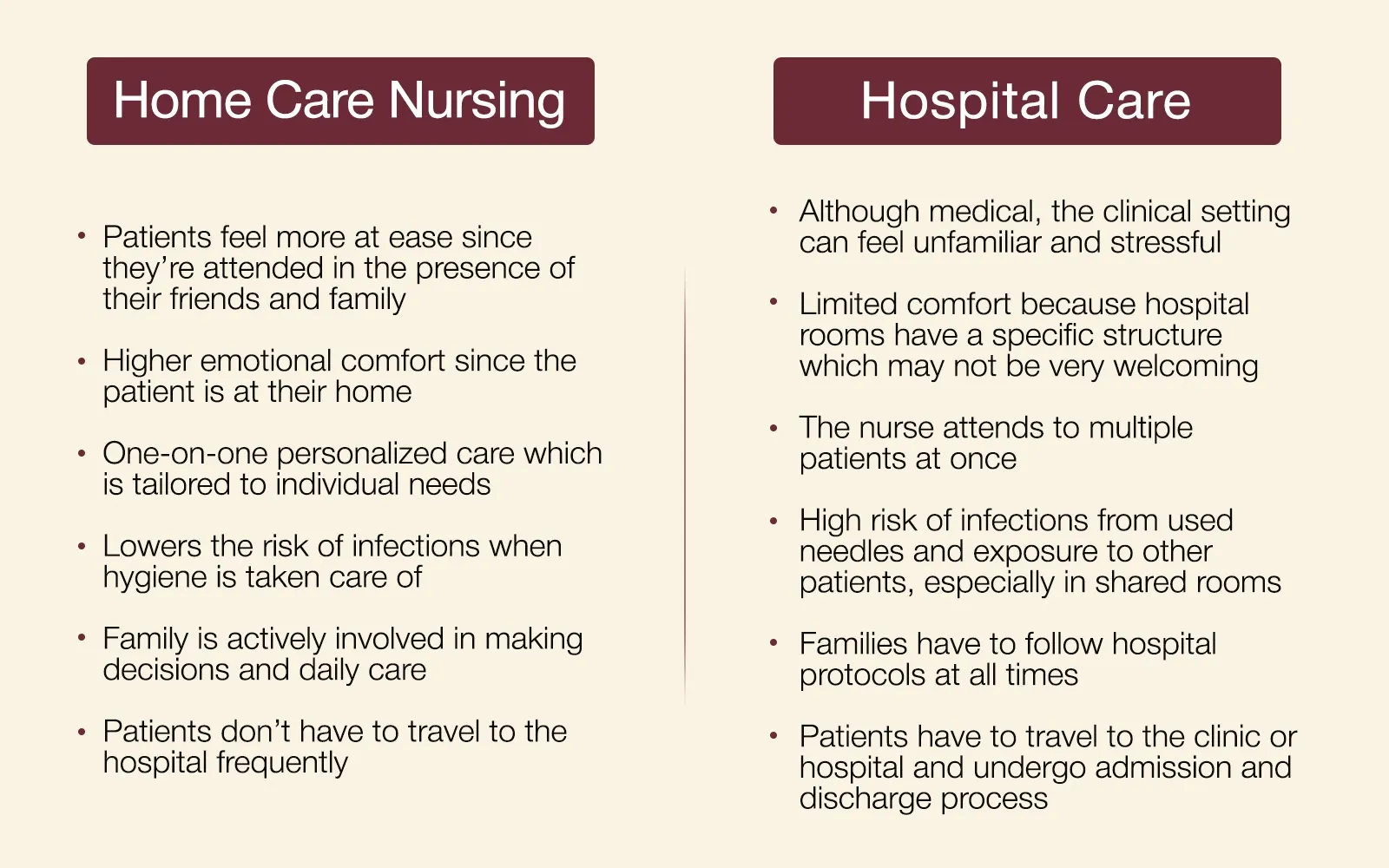
Home care nursing feels more personal, attentive, and comfortable. The table below highlights the key differences between hospital care and at-home nursing.
What Can You Expect from a Professional Home Care Nurse?
A qualified home nurse is trained in medical procedures and a patient-focused approach (like empathy, compassion, and active listening). They follow strict hygiene and safety practices. Moreover, they follow the medical plans created by doctors. They also speak with patients and their families, helping them understand what’s happening.
Checklist for Choosing the Right Home Care Nursing Service
Here are a few things you can look out for while choosing a home care nursing service:
- DHA-licenses.
- Availability for emergencies
- The time they take to reach your home.
- Their hygiene and safety practices.
- Level of structure and attention in their patient care plan.
- Previous patient experiences.
NADZ Healthcare, led by Dr. Nadia, offers one of Dubai’s most premium at-home nursing care services. After you reach out to us via a call or WhatsApp message, a DHA-licensed practitioner builds a treatment plan just for you. Following that, our professionals reach your place in Dubai within 30 minutes with everything they need to treat you or your loved one.