Types of STD Tests for Early Detection Offered by Home Healthcare Providers
The World Health Organization notes that people (aged 15 to 49) acquire 1 million+ sexually transmitted infections (STIs) every day. Most of these infections are asymptomatic, meaning they show no symptoms.
A person can carry the infection all along and spread it to others. Even worse, these STIs can develop into full-blown diseases. For instance, if you don’t treat Chlamydia in time, it can lead to pelvic inflammatory disease (PID) in women. STD testing is the only way to identify and treat infections, even when symptoms have not yet shown. They allow for timely medical intervention and reduce the risk of transmission.
At-home STD testing makes the entire process even easier by removing hesitation and the fear of being exposed to others. You can schedule these tests whenever and wherever you want. There’s 100% flexibility, privacy, and confidentiality. The power is in your hands!
In this guide, we will explain the different types of STD tests available through home healthcare providers like NADZ Healthcare. We’ll also tell you how they work and when they may be recommended.
Types of STD Test Panel Available for At-home Testing
Home healthcare providers like NADZ Healthcare offer various panels of STD testing. The final selection depends on what kind of infection or disease you’re testing for.
1. Standard STD Panel
Standard panel tests for multiple common infections, both bacterial (like Chlamydia and Gonorrhea) and viral (like HIV).
Your doctor will collect multiple samples here. For instance, they’ll collect blood samples for HIV, Syphilis, and Hepatitis. Urine samples can test for Chlamydia and Gonorrhea, while swab samples can test for Chlamydia, Gonorrhea, and Herpes.
2. STD 4 RT PCR
This is a real-time PCR test for detecting the pathogen's DNA. It typically involves collecting a urine sample. This panel is used to identify infections such as Chlamydia trachomatis, Mycoplasma genitalium, Trichomonas vaginalis, and Neisseria gonorrhoeae.
You can expect results within 1 day, so you can take action quickly if necessary. No special preparation, like fasting or a special diet, is required either.
3. STD 7 RT PCR
7 RT-PCR is a molecular diagnostic test that identifies 7 different types of sexually transmitted infections with a single sample. It is a sensitive test and can detect even low levels of pathogens. Thus making it ideal for early intervention. The method of sample collection is generally a vaginal swab or a urine sample. You can expect results in approximately 2 days.
4. STD 10 RT PCR
10 RT-PCR broadens your screening options by testing for multiple pathogens simultaneously. It covers both bacterial and viral infections. Your doctor will usually collect both blood and urine samples for this panel. If there’s a chance of potential exposure, they may also collect swabs. Don’t worry! The entire sample collection process is very quick, often under 30 minutes!
5. STD 11 RT PCR
As the name suggests, it diagnoses 11 STIs, including Herpes (HSV-1 and HSV-2). The doctor usually collects a dry swab or a urine sample. Since the symptoms are very mild or absent, these infections often go unnoticed.
6. STD 13 RT PCR
This test further broadens testing for pathogens. It requires urine, urethral fluid, or vaginal fluid for testing. The doctor will instruct you to collect the first morning urine, right after waking up. They will also ask you to avoid urinating 1-2 hours before the collection to prevent washing away the organisms if you can’t collect the first morning urine. Moreover, you cannot use tampons, spermicides, vaginal creams or lubricants for at least 48 hours before the testing. Sexual activity is to be avoided as well.
7. STD 28 RT PCR
A single test to determine 28 infections and viruses? Yes! It is one of the most comprehensive screening tests. It is recommended for people who have multiple partners and those who show symptoms of STIs. The test results are qualitative: normal or abnormal. If the test shows abnormal levels, the doctor will refer you for additional blood tests and imaging.
In addition to the panels mentioned above, NADZ Healthcare also offers 8- and 86-RT PCR panels for STD testing at home.
Types of Sample Collection for STD Testing
Your doctor or medical professional will collect different types of samples depending on your symptoms and the suspected STI.
Urine Samples
They’re probably the easiest of all. However, small details, such as when to collect the sample, matter when testing for Chlamydia and Gonorrhea. That’s because the bacteria causing these infections are present in the urethra, making the first morning urine sample very important.
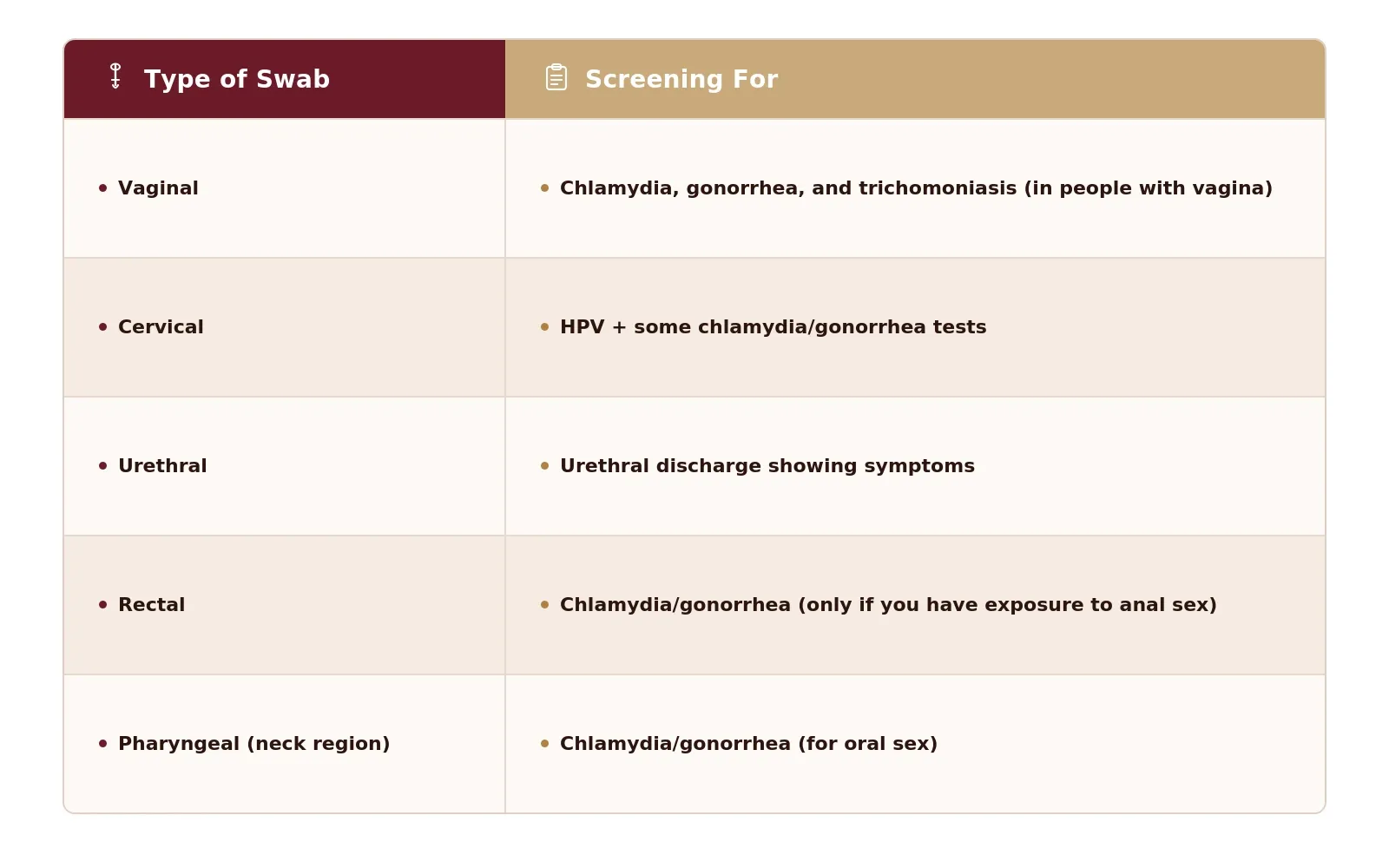
Swab Samples
The doctor can collect a swab from different parts of your body after identifying the infection. Here’s a quick breakdown:
Blood Sample
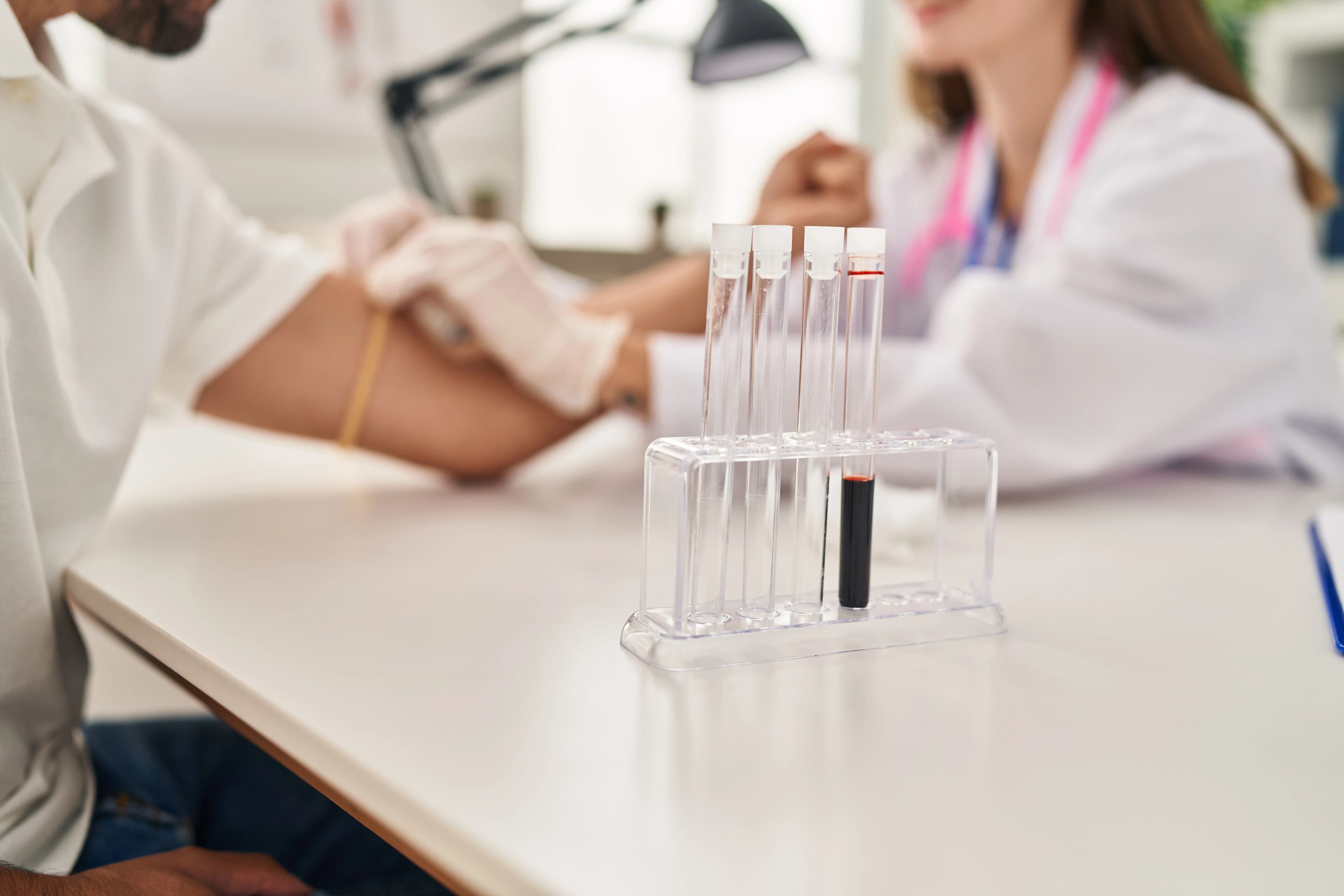
Blood samples are important for infections like HIV and Syphilis, where you need to detect active infection or previous exposure.
What Makes At-Home STD Testing a Popular Choice?
People are choosing at-home STD testing for many reasons, such as:
100% privacy
There’s no chance of a neighbour, friend, or family member spotting you, unlike in a hospital or clinic. You get to choose who you want around, if you want someone.
No need to travel or wait for appointments
There are no waiting rooms here, and no need to book an appointment and travel 30 minutes to an hour to give your samples. The professionals come to you at your preferred place.
Comfort
Testing in a familiar space can reduce stress and anxiety around the process. You feel safer, calmer, and much more in control of the process. Comfort: Testing in a familiar space can reduce stress and anxiety around the process. You feel safer, calmer, and much more in control of the process.
If you’re confused about STD testing or want to book one, get in touch with our team. They’ll clear all your doubts and help you book a slot as per your wishes!
FAQs
Is STD testing covered by medical insurance in the UAE?
Some medical insurances do cover STD testing. It is best to read your insurance contracts carefully before signing up. Also, note that certain kinds of STDs, which are very infectious, are considered “reportable sickness”, meaning you’re supposed to report them to the government.
What happens if my STD test is positive?
If your test results are positive, the doctor will ask you for some more tests and get you started on medications to treat and manage the condition.
Which STDs are incurable?
At present, herpes, hepatitis B (HBV), HIV, and human papillomavirus (HPV) have no cure.
What not to do before a STD test?
Avoid urinating 1-2 hours before the test. Plus, do not engage in any sexual activities (vaginal, oral, or anal sex) and douching (for vaginal swab).
More Posts
Is HIV and STD Testing the Same? Home Healthcare Screening Options
Low Vitamin D Symptoms: Why You Feel Tired All the Time in the UAE
Plantar Fasciitis: The Real Reason Behind Your Heel Pain

What Is STD Testing? Private Screening With Home Healthcare

How DNA Test Is Conducted: Step-by-Step Guide