
Brain Mapping Techniques for Cognitive Health at Home
It is very natural for us to pay attention to our physical health. We call the doctor when our stomach hurts and get X-rays to confirm fractures. What happens when we start forgetting more often or lose our focus and read the same sentence twice?
Your brain is a part of your body, and like other organs, it can change. When that happens, the way you think and act changes, too. When you visit a doctor, they will likely recommend that you undergo “brain mapping.” It is one of the ways to understand how your brain is currently functioning.
Many people assume they need multiple appointments and clinic visits to get answers. However, advances in home healthcare have changed that. Many brain mapping techniques can now be performed at home, making it easier to understand your cognitive health.
What Is Brain Mapping?
Brain mapping is one of the ways to study your brain and its parts. It seeks to answer questions like:
- How do different parts function?
- Are the parts functioning properly?
- Is there any change in your brain structure?
- How is the change in structure affecting your ability?
There are different assessments that answer each of these questions. They help your doctors get a broader picture of what's happening with your brain health. Then, they review these patterns alongside symptoms, medical history, and other clinical findings.
Brain mapping techniques can't independently diagnose neurological or mental health conditions. Instead, the obtained objective data support assessment, monitoring, and clinical decision-making.
Brain Mapping Techniques Used in Home-Based Cognitive Assessments Neurological, physiological, and biological factors affect brain function. So, modern home-based cognitive health programs, like Vital Brain by NADZ Healthcare, combine many assessment methods.
Quantitative EEG (qEEG)
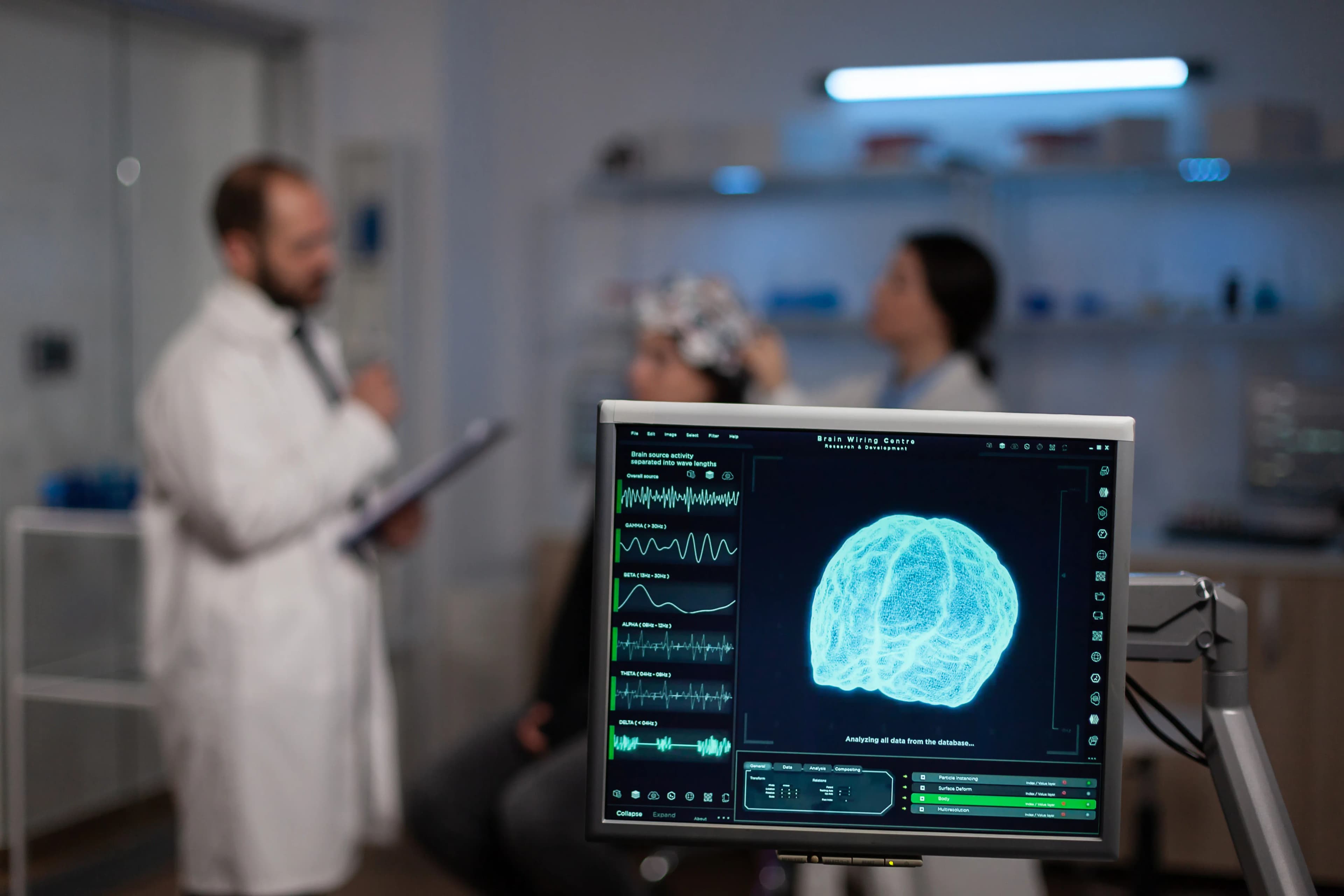
qEEG measures the brain's electrical activity. Small sensors are placed on your scalp. These sensors record the brain's natural electrical activity. It is a non-invasive brain mapping technique. So, there are no injections. No radiation. No surgery.
A 21-channel QEEG assessment records activity from 21 different points across the scalp. That’s because different parts of the brain handle cognitive functions (or processes), such as attention, memory, and decision-making.
Once the data is collected, healthcare professionals search for patterns to identify brainwave activity related to these processes.
Cognitive Testing
“I feel like I forget too easily." “I just cannot pay attention for long." “I find it challenging to fall asleep.” These are all “signs” of affected performance. You can verbally describe what’s happening to you, but you cannot identify where the problem lies.
Cognitive testing uses structured tasks to evaluate how different thinking and memory functions are performing. So, it may evaluate:
- how much you can learn, retain, and recall information
- how easily you stay focused and process information over time
- how you plan, make decisions, and manage multiple tasks
- how quickly the brain can understand and respond to information
- how's your reasoning, pattern recognition, and logical thinking
The results lead to objective performance scores. Then, they're compared with age-based reference ranges.
Blood Biomarker Analysis
Imagine two people with similar symptoms. For instance, brain fog. Will the reason for their challenges be the same? Probably not. That’s because biological factors can also affect your brain’s activity.
Blood biomarker analysis checks for these “biological” factors. For instance,
- Inflammatory processes, which are linked to changes in cognitive function and brain health
- Energy production and glucose regulation
- Nutritional status to identify deficiencies associated with memory (Vitamin D), concentration, and cognitive performance.
Autonomic Nervous System Analysis (ANS)
Do you consciously control your heartbeat, breathing, and blood pressure? No. Your body has a system that keeps such aspects working even when you're not paying attention. That system is called the autonomic nervous system (ANS).
The ANS helps with sleep, relaxation, and resilience. Consequently, poor stress management, disturbed sleep, and other factors can affect your brain’s functioning.
ANS analysis helps healthcare professionals understand how effectively the body handles those transitions. This test comes in use if you’re experiencing brain fog, poor concentration, mental fatigue, stress-related concerns, or sleep issues.
For example, heart rate variability is a physiological marker. It reflects how effectively the body adapts to stress and recovery demands.
DNA Methylation Analysis
We have two different types of age.
- Chronological age: The number of birthdays you've had. So, if you're 45 years old, your chronological age is 45.
- Biological age: It is the pattern of aging that happens inside the body at a cellular level.
DNA methylation analysis helps estimate those biological aging patterns. That’s why two people can be exactly the same chronological age, yet their bodies may show very different aging patterns.
Note that biological age is not a measure of cognitive function. Instead, it gives additional information about long-term health patterns likely relevant to your brain health and resilience.
Who May Benefit from Brain Mapping Techniques?
The sooner you understand how your brain functions, the easier it is to monitor future changes.
These assessments can be considered by:
- Individuals experiencing persistent brain fog
- People concerned about memory changes
- Adults with concentration or attention difficulties
- Individuals experiencing sleep-related cognitive issues
- People with a family history of cognitive decline
- Individuals interested in monitoring long-term cognitive health
NADZ Healthcare’s Vital Brain, a home-based brain mapping assessment, combines QEEG, cognitive testing, and other evaluation tools to support cognitive health assessment. Contact our team to book an appointment.
FAQs
1. Can I do brain mapping at home?
Yes, you can do brainwave testing and memory/thinking tests at home. You will need to book an appointment for a healthcare professional to come to your home and do the test.
2. What are 5 signs that your brain is in trouble?
Common signs include [1] forgetting things often, [2] having trouble paying attention, [3] feeling mentally tired or foggy, [4] thinking more slowly than usual, and [5] feeling confused. They can happen for many reasons. So, it is best to speak with your doctor first.
3. What are the techniques used in brain mapping?
Brain mapping can include qEEG brain wave testing, memory and thinking tests, blood tests, nervous system checks, and DNA testing. Each test provides different information about your brain health.
More Posts

What is Brain Mapping? Brain Activity and Cognitive Health

Benefits of Taking Flu Vaccine with Home Healthcare

What Are PCR Tests? Safe Home Healthcare Testing

Effects of Sleep Disorder: Influence on Mental and Physical Health

What Is in the Flu Vaccine? Science Behind the Ingredients